
Master Bulk Image Downloading
This article provides a comprehensive overview of a powerful online utility designed to streamline the process of extracting and saving visual media from web pages. We will explore the core functionalities, key benefits, and advanced configuration settings of this platform. Additionally, we will discuss the diverse range of supported file formats, practical use cases for various professionals, and provide a detailed guide on how to maximize the efficiency of your digital asset collection using this innovative image extraction tool.
In the early days of the internet, saving an image from a website was a simple but ultimately tedious task. Users were forced to hover over a specific graphic, right-click their mouse, and manually select the "Save Image As" option. While this method is perfectly adequate for saving a single meme or a lone reference photo, it rapidly becomes a severe bottleneck when dealing with modern, media-heavy websites. Imagine a scenario where a digital marketer needs to pull fifty product photos from an e-commerce catalog, or a researcher needs to archive dozens of historical photographs from an educational gallery. The manual approach is not only incredibly frustrating but also a massive drain on productivity, often leading to missed files, accidental duplications, and repetitive strain.
To combat this widespread digital inefficiency, developers have created automated scraping utilities. One of the most effective and accessible tools currently available for this exact purpose is https://imagedownloader.website. This web-based platform operates as a dedicated bulk image extractor, allowing users to harvest every single graphical asset from a specified URL with just a few simple clicks. By entirely removing the need for manual downloading, the platform transforms a chore that could take hours into an automated process that takes mere seconds, revolutionizing the way professionals and casual users alike interact with web-based media.
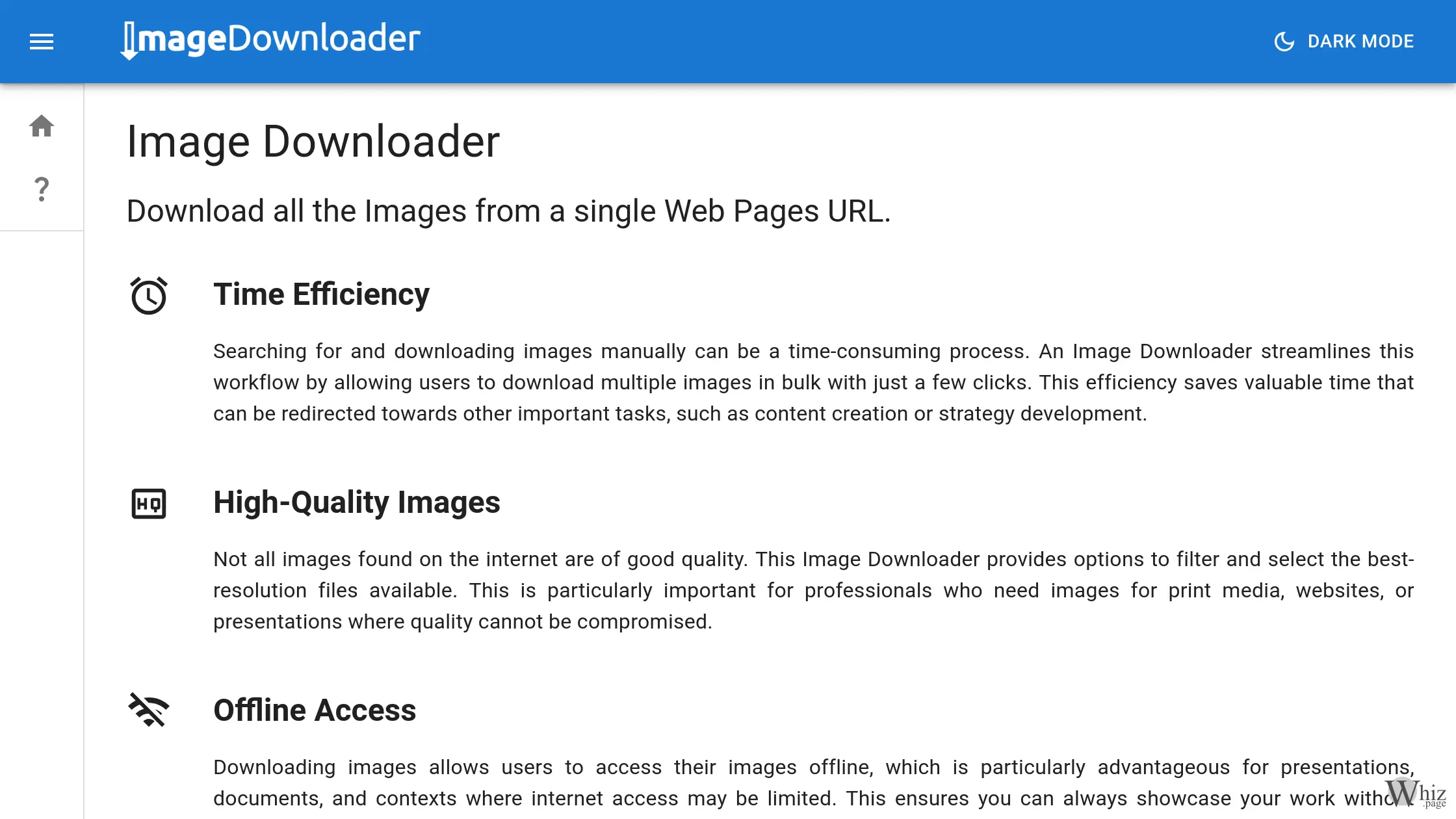
One of the most significant advantages of utilizing this platform is the sheer time efficiency it introduces to your daily workflow. Searching for and downloading graphics manually is an inherently time-consuming process that distracts from core objectives. An automated downloading utility streamlines this entire workflow, allowing users to process large batches of files simultaneously. This efficiency saves highly valuable time that can be redirected toward much more important and mentally demanding tasks, such as content creation, digital strategy development, marketing analysis, or creative design work. In a professional environment where time directly equates to money, having a rapid extraction tool on hand is an indispensable asset.
Furthermore, this tool plays a critical role in securing high-quality visual assets. It is a well-known fact that not all visual media found on the internet is of good quality. Websites are frequently littered with low-resolution thumbnails, microscopic tracking pixels, and heavily compressed layout graphics. This platform provides robust options to filter and select only the best-resolution files available on the target page. This functionality is particularly important for creative professionals who urgently need high-fidelity files for print media, website redesigns, or client presentations where visual quality simply cannot be compromised.
In addition to quality control, bulk extraction facilitates vital offline access. In our hyper-connected world, we often take internet connectivity for granted, but dead zones, server outages, and travel can quickly sever access to important online resources. By downloading complete sets of images directly to a local hard drive, users guarantee that they can access their vital graphics entirely offline. This is particularly advantageous for individuals preparing presentations, compiling offline documents, and working in contexts where internet access may be limited, restricted, or completely unavailable. This ensures that you can always showcase your work, reference your research, or continue your design projects without unexpected digital interruptions.
The true power of the platform, however, lies in its highly customizable aggregator settings. Rather than blindly ripping every file from a server, the tool allows users to precisely configure how the extraction behaves. For instance, the platform features a highly innovative "Scroll Duration" setting. Many modern websites utilize a technique called "lazy loading," where images are only loaded into the browser when the user physically scrolls down the page. If an extraction tool only reads the initial page load, it will miss everything at the bottom. The Scroll Duration setting allows the user to instruct the tool to simulate scrolling down the page for a specified amount of time, ranging from zero to sixty seconds. If a page does not use lazy loading, setting this to zero vastly increases the processing speed.
Alongside scrolling, users can dictate the absolute maximum number of images to be considered for processing, with a generous cap of up to 500 images per extraction. This prevents the tool from getting caught in infinite-scroll loops common on social media feeds and ensures that the user's local storage is not immediately overwhelmed by thousands of unintended files.
Precision filtering is further enhanced by the platform's meticulous file size constraints. Users can define a strict minimum and maximum file size range in bytes. For example, a user might set a minimum file size of 50 kilobytes to automatically filter out all tiny navigational icons, social media logos, and spacer graphics, ensuring that only substantial photographs or illustrations are downloaded. The valid minimum range spans from zero to ten million bytes, while the maximum range extends up to twenty million bytes, giving users granular control over the precise data footprint of their bulk downloads. The platform also offers a "Check Links" feature that inspects every single direct link on the target page for supported media types, guaranteeing a thorough extraction.
Speaking of media types, the platform boasts unmatched compatibility with an extensive array of digital formats. Modern web design has moved far beyond simple standard formats, and a capable extractor must keep up. This tool flawlessly processes traditional formats like JPEG, PNG, GIF, and BMP. However, it also fully supports next-generation, highly optimized formats such as WEBP and AVIF, which are rapidly becoming the new standard for fast-loading web pages. Furthermore, the tool recognizes APNG (Animated Portable Network Graphics), HEIF and HEIC (High-Efficiency Image Container formats popularized by mobile devices), SVG (Scalable Vector Graphics crucial for responsive web design), and even ICO files used for website favicons. By supporting this vast spectrum of formats, the platform guarantees that no matter how a website chooses to encode its visual data, the user can successfully extract it.
Finally, the platform ensures a seamless, modern, and highly secure user experience. It features a sleek Dark Mode toggle, reducing eye strain for professionals who work long hours in low-light environments. To ensure network security and prevent malicious automated bot abuse, the extraction process is safeguarded by Google's reCAPTCHA human verification technology. This guarantees that the service remains stable, fast, and available for legitimate users who need reliable access to its powerful features. By combining granular control, immense format compatibility, and a streamlined interface, this platform stands as a premier solution for anyone looking to master the art of bulk digital media extraction.